
Why Most Coaches Struggle to Get Clients (and the Fix That Actually Works)
Introduction: The Silent Struggle of Early-Stage Coaches

If you’re wondering how to get coaching clients and why your calendar still feels empty, you’re not alone. According to The Coach Space, most new coaches earn below $40,000 per year because they lack a consistent client-generation system.
After helping early-stage coaches build funnels that actually convert, I’ve seen a clear pattern: it’s not about talent or passion — it’s about structure. Coaches who rely on random social posts, referrals, or free calls stay stuck in the feast-and-famine cycle.
This guide explains why most coaches struggle to get clients and reveals the systemic fix that drives steady, predictable growth.
1. The Harsh Truth: Why Most Coaches Struggle to Get Clients
1.1. No Consistent Pipeline
New coaches often rely on referrals or occasional social media engagement. That isn’t scalable. The Simply.Coach survey found that inconsistent client flow is the number-one frustration for new coaches.
Without a pipeline, you live month-to-month, uncertain where the next client will come from. You need a predictable process that brings in leads every week — not chance or luck.
1.2. Weak Online Visibility
Most early-stage coaches haven’t optimized their digital presence. They post inconsistently, have unclear positioning, or rely on generic “I help people reach their goals” messaging.
In 2024, HubSpot’s State of Marketing Report found that 60% of buyers research online before contacting a professional. If your name doesn’t show up with authority, clients won’t find you.
1.3. Marketing Without Strategy
Posting daily isn’t a strategy. A strategy connects each step — content, leads, email follow-up, and conversion — into one measurable process.
Without a funnel, you can’t track:
- Which content drives conversions
- Where your best clients come from
- How many visitors turn into leads
That’s why “post and pray” marketing fails.
1.4. Tech Overwhelm
Many solopreneur coaches get stuck setting up tools. Landing pages, CRMs, schedulers, automations — it feels like a maze.
Research from Instructor Academy shows over 70% of new coaches delay launching because of technical confusion.
1.5. Fear of Selling
Most coaches love helping people, not selling. Yet as GoMasterCoach notes, “Coaches often fail not because they can’t coach — but because they underestimate the business element of coaching.”
Avoiding structured sales systems keeps your business in survival mode.
2. The Root Problem: No Coaching Funnel
Every challenge above stems from one missing element — a coaching funnel.
A coaching funnel is a repeatable process that moves strangers from awareness to paying clients. It does this by attracting, nurturing, and converting leads automatically.
The three key stages:
- Attract – Draw attention through content or a lead magnet for coaches (e.g., a checklist or free training).
- Nurture – Use emails or videos to build trust and authority.
- Convert – Invite prospects into a discovery call or paid offer.
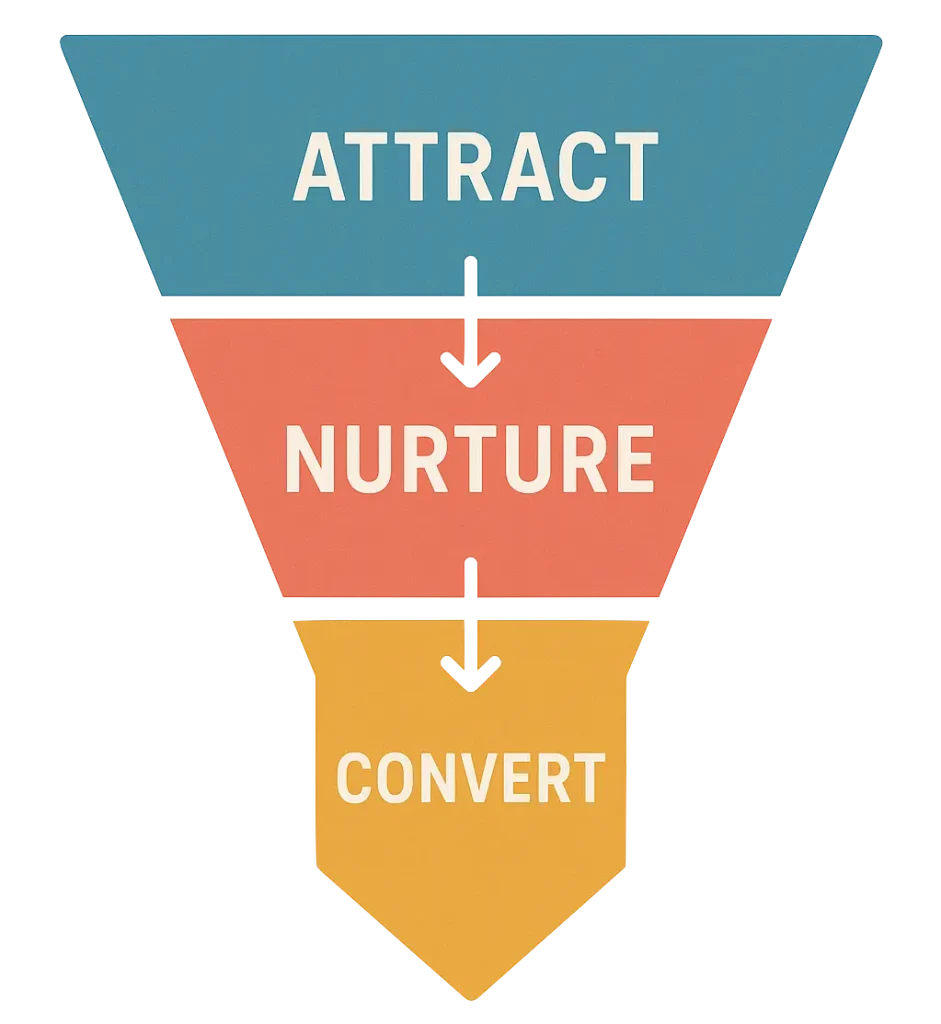
When done right, your funnel becomes what Entrepreneur HQ calls a “24/7 digital marketing assistant for your coaching business.”
Without a Funnel
- You depend on referrals.
- Income fluctuates wildly.
- You waste time guessing what works.
With a Funnel
- Leads come in consistently.
- You grow an email list of warm prospects.
- You have data to improve results month after month.
3. The Fix That Actually Works: Build a Predictable System
Step 1: Define a Niche and Offer
Vague messaging kills conversions. You must clearly state who you help and what transformation you deliver.
Example: Instead of “I’m a life coach,” say “I help burned-out professionals regain clarity and energy in 90 days.”
This positioning builds instant trust and improves your organic reach because Google rewards content tied to specific niches.
Step 2: Create a Compelling Lead Magnet
A lead magnet gives immediate value in exchange for an email — solving one small but urgent problem for your ideal client.
According to Paperbell, coaches who build email lists early have far higher client consistency and launch success.
Examples:
- “5 Clarity Questions Every Leader Should Ask Before Hiring a Coach”
- “Goal-Setting Template That Doubles Focus in 7 Days”
- “Mini Email Course: From Stuck to Clients in 5 Days”
It’s the first trust-building step in your funnel.
Step 3: Build a Focused Landing Page
Your landing page doesn’t need to be fancy — just clear. Tools like Systeme.io, WordPress, or ClickFunnels can help, but clarity matters more than design.
A good page includes:
- Headline focused on the result (“Land Consistent Clients Without Hustling Daily”)
- Short benefits list
- Simple email opt-in
- Photo, credentials, and testimonial
That single page becomes your entry point into the email funnel.
Step 4: Automate Follow-Up
Once people opt in, use automation to nurture relationships.
A basic email funnel looks like this:
- Welcome Email: Deliver the freebie and set expectations.
- Authority Email: Share your story and results.
- Value Sequence: Teach simple frameworks and quick wins.
- Offer Email: Invite them to book a discovery call.
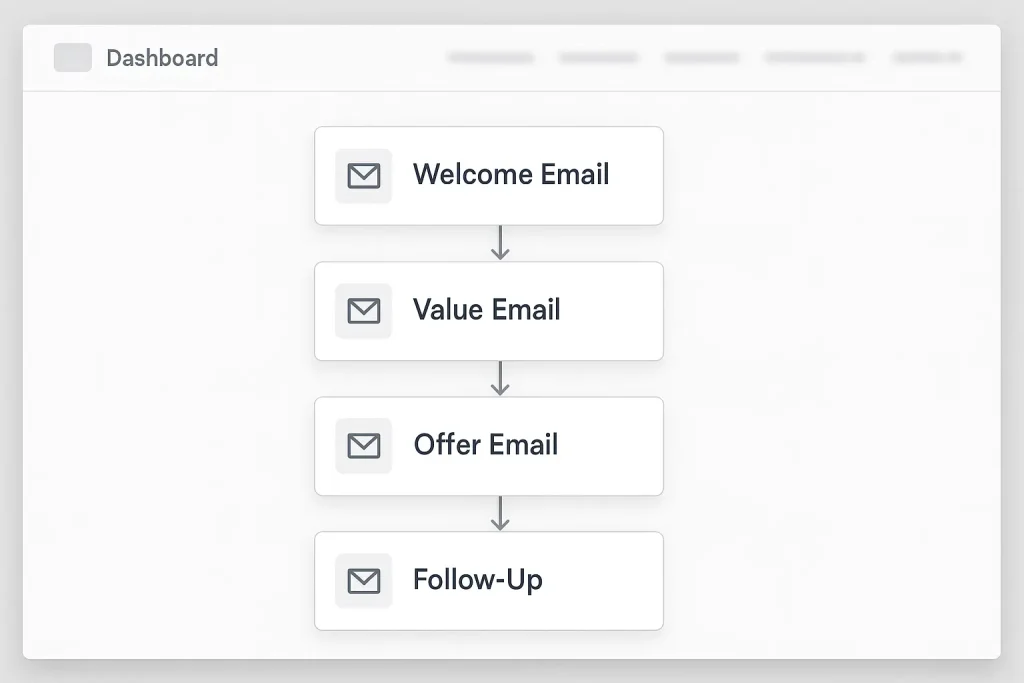
HubSpot reports automated sequences generate 200–300% more engagement than manual follow-ups.
Automation is leverage — it keeps selling while you’re coaching.
Step 5: Convert Through Discovery Calls
A structured discovery call is where interest becomes income.
Follow this flow:
- Identify goals and challenges
- Reframe their pain with insight
- Present your offer as the logical solution
- Invite commitment confidently
You’re not “selling” — you’re guiding them to clarity.
4. Modern Client Generation That Works in 2025
4.1. Value-First Content
Buyers want proof of value before they pay. The 2024 HubSpot Marketing Trends Report found that 81% of prospects choose providers who educate them first.
Share tutorials, client stories, or frameworks. Content builds credibility and feeds the top of your funnel.
4.2. Evergreen Funnels
Evergreen funnels outperform launches because they run year-round.
They combine:
- SEO blogs (like this one)
- Lead magnets
- Nurture sequences
- Automated conversion offers
As Entrepreneur HQ notes, evergreen funnels “multiply your reach and remove constant launch stress.”
4.3. Email Personalization
Modern email tools personalize based on user behavior. Campaign Monitor reports personalized automation can triple conversions.
Send specific follow-ups — if someone downloads your mindset guide, send a coaching story. If they visit your pricing page, send a case study.
4.4. Collaborations and Guest Features
Early-stage coaches grow fastest through partnerships — podcasts, guest posts, or webinars with aligned experts.
This builds backlinks, authority, and exposure without ad spend.
5. The Mindset Shift: Stop Selling, Start Guiding
Many coaches resist funnels because they fear being “salesy.”
But as Life Coach Hub explains, “A funnel is just your client’s journey — from discovering you to trusting you.”
Funnels aren’t manipulation; they’re education.
Each step should deliver value and clarity.
Selling becomes service.
6. Recommended Tools and Systems
While this article remains platform-neutral for ranking, here’s what consistently works:
- FunnelsOpt Framework: Step-by-step process to build your first coaching funnel.
- ClickFunnels for Coaches: Drag-and-drop builder that integrates pages, email, and payments.
- Systeme.io: A lower-cost alternative for early solopreneurs.
Choose whichever system you can maintain. The tool matters less than having a process.
7. Expected Results After Implementing
When you set up a working funnel, typical results appear within 60–90 days:
- 3–5× increase in qualified leads
- 30–50% more discovery calls
- Predictable monthly income instead of feast and famine
As Entrepreneur HQ summarizes:
“A well-optimized funnel lets you duplicate yourself — grow your business without adding more hours.”
Automation doesn’t replace your passion; it amplifies it.
8. Summary: The Fix That Works
Why most coaches fail to get clients:
- No client system
- Weak visibility
- Fear of selling
- Tech confusion
The fix: Build a simple, automated funnel that attracts, nurtures, and converts leads daily.
As Russell Brunson puts it, “Funnels are how you scale your message to serve more people.”
When your funnel works, you stop guessing — and start growing with confidence.
FAQs
Q1: How can I get coaching clients online as a beginner?
Start with a clear niche, a simple lead magnet, and a one-page funnel that collects emails. Focus on helping before selling.
Q2: How do I attract high-paying coaching clients?
Position your offer around tangible outcomes. Use case studies, testimonials, and strategic pricing to signal authority.
Q3: What’s the best platform to build a coaching funnel?
Use any all-in-one system you can maintain. ClickFunnels, Systeme.io, and Kartra are popular among coaches for simplicity.
Q4: Do I need ads to get clients?
No. Many coaches build six-figure practices through organic funnels using SEO, email, and partnerships before spending on ads.
Author Box
Author: FunnelsOpt Editorial Team
FunnelsOpt helps early-stage coaches and consultants design automated client acquisition systems that work.
👉 Learn how to build your first high-converting coaching funnel and download our free lead magnet for coaches.